

A Landlord's Guide to the First 48 Hours After a Tenant Reports Mold or a Leak
What to do hour by hour when a tenant calls about water or mold
“There’s water coming through the ceiling in the bathroom.”
The text comes in at 9 p.m. Or the email lands Monday morning with a photo attached and a simple line. “I think there’s mold behind the dresser.”
For a landlord or property manager, the next two days shape the repair bill, the insurance claim and the relationship with your tenant. We work with property managers, landlords and HOAs across Dallas-Fort Worth, and this is the playbook we’d hand any owner who wants to handle that first call well.
Why the clock matters
The EPA recommends drying wet building materials within 24 to 48 hours to help prevent mold growth. Fast action keeps a water job a water job.
Water moves into drywall, baseboards, carpet pad, subfloor and cabinets faster than most people expect. The longer it sits, the more material has to come out and the more likely mold becomes part of the scope. A quick response also shows your tenant you’re taking the problem seriously, and it gives you a clean record for insurance.
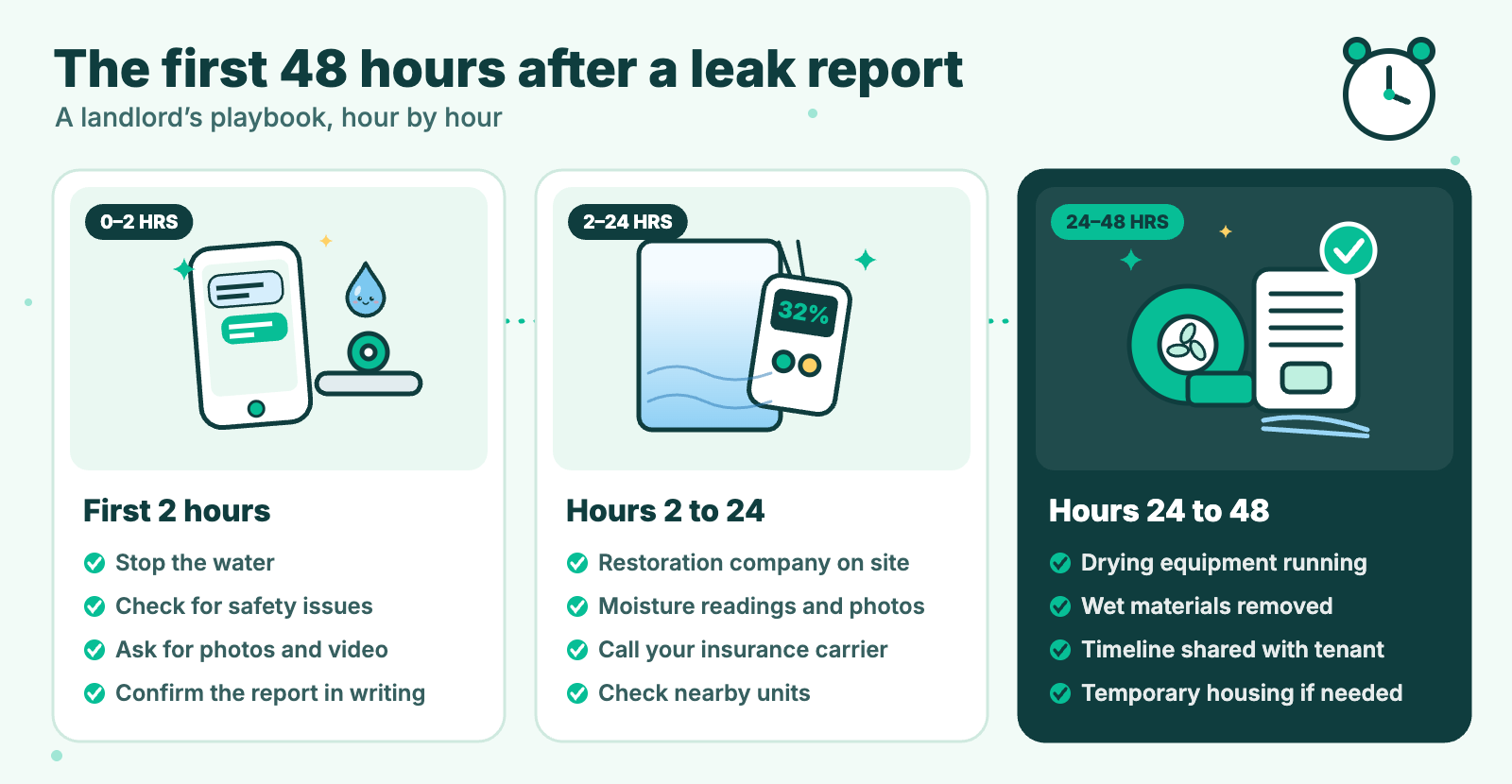
The first 2 hours
The first job is simple. Get the water stopped, make sure everyone is safe, and confirm the report in writing.
- Walk the tenant through the shutoff. Point them to the fixture valve or the main, and send maintenance if they can’t find it.
- Check for safety issues. Water near outlets, a sagging ceiling or water from another unit all call for a faster response.
- Ask for photos and video. Have the tenant capture the source, the wet areas and any damaged belongings.
- Reply in writing. A short text or email confirming what was reported and what happens next starts your paper trail.
Hours 2 to 24
Now it’s time to get eyes on the damage. Call a restoration company for active water, and open the conversation with your insurance carrier.
A trained technician uses moisture readings to find where the water traveled, well beyond what shows on the surface. That scope drives the drying plan and the claim. Ask your restoration company for photo documentation from the first visit, since adjusters rely on it.
If units above or below might be affected, check those too. In multi-family buildings, water rarely stays in one unit.
Hours 24 to 48
By the second day, drying should be underway, wet materials should be coming out where needed, and your tenant should know the plan.
- Drying equipment running. Air movers and dehumidifiers typically stay in place for several days, with moisture checks along the way.
- Removal of materials that can’t be saved. Soaked carpet pad and wet drywall are common examples.
- A clear update for your tenant. Share the expected timeline, the noise from equipment, and which rooms will be off limits.
- A decision on temporary housing if the unit isn’t livable during the work. Check what your lease and your policy say.
When the call is about mold
Mold follows its own path in Texas. It starts with a licensed mold assessment consultant, then moves to a separate licensed remediation company.
- Assessment. The consultant inspects the unit and writes a protocol, which is the plan for removal.
- Remediation. A licensed mold remediation company follows that protocol. Texas rules keep assessment and remediation with different companies on the same project.
- Clearance. The consultant returns to confirm the work passed, and a Certificate of Mold Damage Remediation can be issued for your records.
Mold is rarely an overnight emergency, but it still calls for prompt action. Find and fix the moisture source at the same time so the mold stays gone.
Your 48-hour checklist
- Water stopped and the tenant safe
- Report confirmed in writing
- Tenant photos saved to the unit file
- Restoration company on site for active water
- Insurance carrier notified
- Neighboring units checked
- Drying plan and timeline shared with the tenant
- For mold, a licensed assessment consultant scheduled
What Texas law asks of landlords
Texas Property Code Section 92.052 requires landlords to make a diligent effort to repair conditions that materially affect a tenant’s health or safety, once the tenant gives notice and is current on rent.
Texas gives landlords a reasonable time to make repairs, which the Texas State Law Library describes as usually about 7 days. Severe problems or supply shortages can affect that window. Starting in the first 48 hours keeps you well inside it and keeps small problems from growing.
For questions about your specific situation, talk with a real estate attorney. This article is general information and not legal advice.
How Triad Property Recovery works with property managers
We make the first call simple. A real person answers around the clock, our IICRC certified technicians respond to active water day or night, and every job starts with a free onsite assessment.
- One point of contact from the first visit through the rebuild
- Photo documentation of every stage for your records and your adjuster
- Scope, photos and readings sent to your adjuster, with you in charge of your claim
- Experience with apartment communities, HOAs and single-family rentals across DFW
Save our number for the next late-night call. Reach us at (469) 523-9982 to schedule a free assessment, or see how our water damage restoration works.