

Mold in Your Texas Rental? Your Landlord's Duty to Repair and How to Give Notice
What Texas law expects from you and your landlord, and what to do if the repair never comes
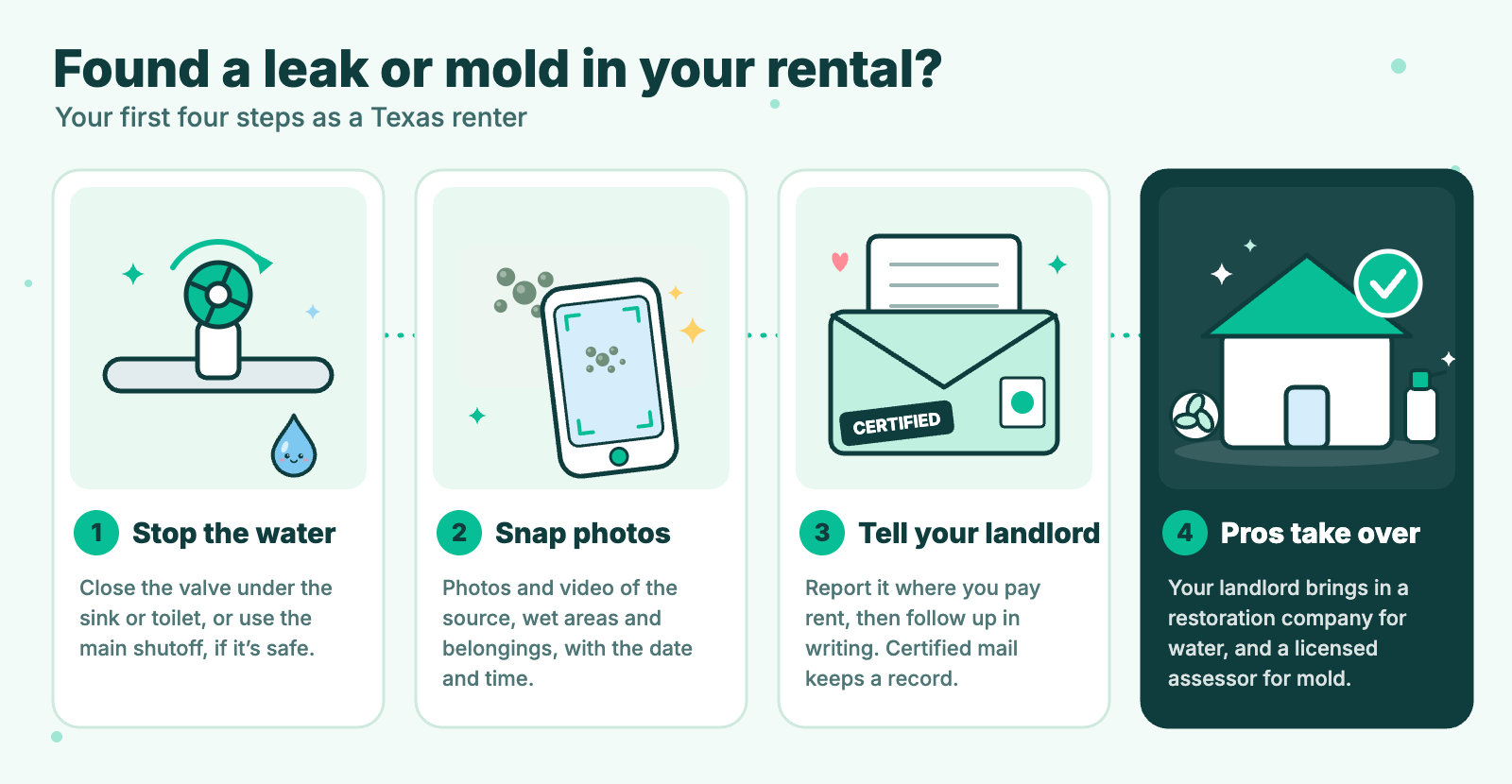
“You reported the musty smell two weeks ago.”
Now there’s a dark patch spreading across the bathroom ceiling, and the maintenance request still says “pending.” You open the bathroom door and that damp, earthy smell hits you before the light comes on.
When you rent, mold and leaks come with a different set of questions than they do for a homeowner. Who has to fix it? How long do they have? And what can you do if nothing happens?
We hear from renters across Dallas-Fort Worth every week. If you just found water and need to know who to call right now, start with our guide I Rent My Home and Have Water Damage. Who Do I Call First? This article picks up from there, with a focus on mold and on what Texas law expects from you and your landlord.
Your landlord is usually responsible
In most cases, the repair falls to your landlord. Texas Property Code Section 92.052 requires landlords to repair conditions that materially affect the health or safety of an ordinary tenant, and mold and plumbing leaks are common examples.
That duty applies when three things are true.
- You are current on rent.
- You gave proper notice of the problem.
- You, your household or your guests did not cause the damage, beyond normal wear and tear.
Your lease may add its own steps, so keep a copy handy while you work through this.
Giving notice the right way
Start by reporting the problem to the person or office where you pay rent. Then put it in writing. Certified mail with a return receipt gives you the strongest record.
Texas law expects a written follow-up if the first report doesn’t get the problem fixed, and sending your first notice by certified mail covers that step from the start. The Texas Department of Licensing and Regulation (TDLR) also recommends reporting mold or moisture problems verbally and then in writing.
A good written notice includes
- Your name, unit number and the date
- What you found and where (for example, a dark patch on the bathroom ceiling and a musty smell in the hall closet)
- When you first noticed it and when you first reported it
- Photos, attached or linked
- A request for repair and the best way to reach you
How long a repair can take
Texas gives landlords a reasonable time to make repairs, which the Texas State Law Library describes as usually about 7 days after notice. That window can stretch for serious problems or when labor and materials are hard to get.
Active water that is still spreading is a different story. Call your property’s emergency maintenance line right away, day or night. The EPA recommends drying wet building materials within 24 to 48 hours to help prevent mold growth, so every hour counts.
What to do while you wait
The waiting is often the hardest part. A few simple habits keep your home healthier and your records strong.
- Let the licensed pros handle the growth itself, since scrubbing or spraying can send spores into the air and paint only hides it
- Run the bathroom fan and open windows when the weather allows
- Move belongings away from damp walls and the affected area
- Take new photos every few days so you have a record of any changes
- Check in with your doctor if anyone in your home has breathing concerns
How mold removal works in Texas
Mold removal in Texas follows three steps, each handled by a licensed professional.
- Assessment. A licensed mold assessment consultant inspects the unit and writes a protocol, which is the plan for removal.
- Remediation. A licensed remediation company follows the protocol. Texas rules keep assessment and remediation with different companies on the same project.
- Clearance. The consultant checks the work, and the property can receive a Certificate of Mold Damage Remediation.
Your landlord or property manager schedules these steps, because the work happens on their building and usually runs through their insurance. Smaller rental buildings can have some exemptions, so your landlord may handle a small area with their own maintenance team.
If the repair never comes
Send a written follow-up by certified mail, keep every record, and get advice before you take matters into your own hands.
Texas law gives tenants a few remedies, like asking a court to order repairs, a repair and deduct option, or ending the lease in some cases. Each one has strict requirements, and following them closely keeps you protected, so talk with an attorney before you withhold rent or make repairs yourself.
These resources can help.
- The Texas State Law Library guide on a landlord’s duty to repair
- Your city’s code enforcement office or local health department, for health and safety conditions
- Your local housing authority, if you live in subsidized housing
- TDLR, if unlicensed people are doing regulated mold work
- A tenant rights attorney or a local legal aid office
This article is general information and not legal advice.
How Triad Property Recovery helps rental properties
Triad Property Recovery handles water damage restoration and mold remediation for landlords, property managers and property owners across Dallas-Fort Worth. Our IICRC certified technicians respond around the clock for active water, and every job starts with a free onsite assessment.
If you own or manage the property, call us at (469) 523-9982 to schedule your assessment. If you rent, share this page with your landlord or property manager and ask them to give us a call. We’ll take it from there.
Learn more about our mold remediation and water damage restoration services.