

Why Jobs Can't Be Priced Over the Phone (and What Drives the Cost)
What really goes into the cost of a restoration or cleanup job, and how to get a number you can trust.
“Can you give me a ballpark?”
It’s one of the first things people ask when they call us, whether it’s water on the floor, a musty smell in the closet, or a room no one wants to walk into after a loss. It’s a fair question. You want to know what you’re getting into before anyone shows up at your door.
We’ll always give you a real number. We just give it after we’ve seen the job, because that’s the only way the number holds up. Here’s why, and what actually goes into the price.
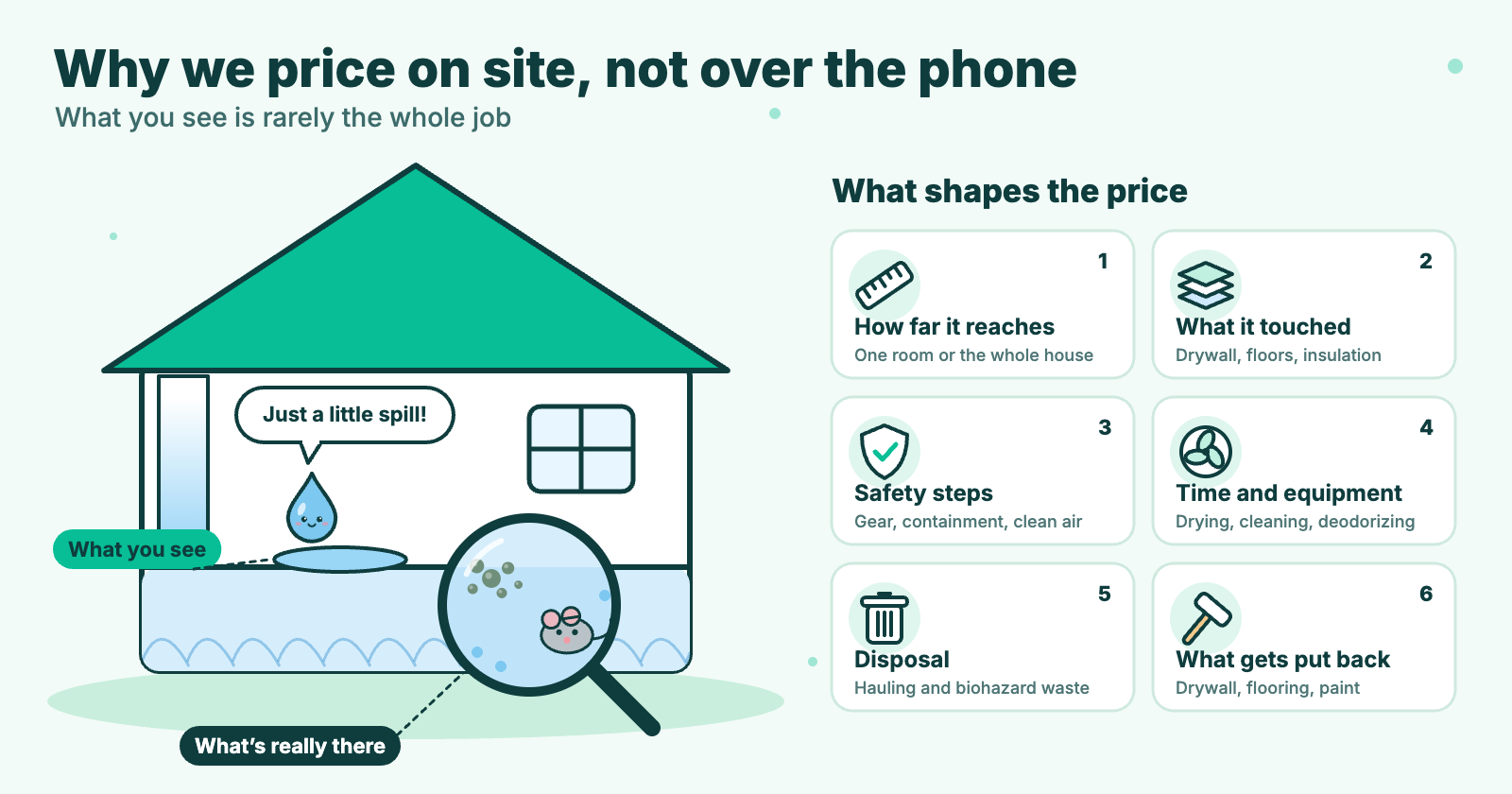
What you see is rarely the whole job
Most of the work we do happens in places you can’t see from the doorway.
A wet spot on the carpet might be a few square feet of damp pad. Or it might be the edge of water that wicked up the drywall in two rooms and soaked the subfloor underneath. A small patch of mold on a bathroom wall can be the corner of a much larger colony behind it. After a death or a serious injury, fluids can travel under flooring and into the subfloor, well past the stain on the surface. In a hoarding cleanout, nobody knows what the floors and walls look like until the last bag is out. Rodent droppings in a pantry often mean nesting material in the attic insulation too.
Over the phone, those situations sound the same. On site, they can be very different jobs. That’s why every Triad job starts with a free onsite assessment.
What shapes the cost of any job
No matter the service, the same handful of things set the price.
- How far it reaches. One room or three, one floor or two, a closet or a whole house.
- What it touched. Tile, hardwood, drywall, carpet, insulation and cabinets each need their own approach, and porous materials often have to come out.
- The safety steps it calls for. Protective gear, containment walls, negative air and HEPA filtration add time and equipment.
- Time and equipment. Drying equipment runs until readings show the structure is dry. Cleanup crews work until every surface meets the standard.
- Disposal. Regulated biohazard waste, dumpster loads from a cleanout, or a few bags of wet pad all cost different amounts to haul away properly.
- What gets put back. Some jobs end when the cleaning is done. Others need drywall, flooring, paint and trim, which our rebuild crew can handle.
How each service is priced
Water damage. The type of water matters most. Clean water from a supply line is the simplest to dry. Gray water from a washing machine and black water from sewage or outside flooding call for more protective steps and more material removal. How long the water sat matters too, since water caught in the first day usually means less tear out.
Mold remediation. In Texas, mold removal follows a written protocol from a licensed mold assessment consultant. The protocol spells out what gets removed, how the area is contained and how it’s cleaned, so we price the job directly from it. If you don’t have a protocol yet, we’ll point you to a licensed consultant to get started.
Biohazard and trauma cleanup. The price depends on how far the contamination spread, which materials it reached and how much regulated waste has to be removed and disposed of. We work discreetly, and we walk the family or property owner through the scope gently and clearly before anything starts.
Unattended death cleanup. Time is the biggest factor. The longer a loss goes undiscovered, the further fluids and odor travel into flooring, walls and air ducts, and the more removal and deodorization the job needs.
Hoarding cleanouts. Volume sets most of the cost, along with how much sorting the family wants us to do to save keepsakes and paperwork. We also look at what’s underneath, since floors and walls sometimes need cleaning or repair once the items are cleared.
Rodent cleanup. The spread of droppings and nesting material drives the price. Cleanup in a kitchen cabinet is quick. Contaminated attic insulation means removal, sanitizing and new insulation.
Why a phone quote can grow
A price given before anyone sees the job is built on the best case. Once the walls are opened or the room is cleared, the scope changes and so does the bill.
An onsite assessment gives you a number you can plan around and a written scope you can review line by line. No surprises halfway through the job.
What happens at your free onsite assessment
A Triad technician comes to you, usually within the hour for emergencies. We find the source of the problem, measure how far it reached with moisture meters and other tools, and photograph everything for your records. Then we walk you through a written scope and price before any work begins.
How to get ready for the visit
- Stop the water at the fixture or main shutoff if there’s an active leak
- Take photos before anything is moved or cleaned
- Have your insurance policy number handy
- Write down when you first noticed the problem
- If you rent, let the owner or property manager know we’re coming
Working with your insurance
Many homeowners and commercial policies cover sudden losses, like a burst pipe or a biohazard event in the home. Every policy is different, so a quick call to your agent is a good first step.
We document the loss, meet your adjuster on site, and send the scope, photos and readings. You stay in charge of your claim.
Get a real number from Triad Property Recovery
Our IICRC certified technicians help homeowners, landlords, property managers and businesses across Dallas-Fort Worth. A real person answers around the clock.
Call (469) 523-9982 to book your free onsite assessment, or learn more about our water damage restoration, mold remediation, biohazard cleanup and hoarding cleanout services.